
📌 Key Takeaways
Pantry pests are common insects that can infest stored foods such as flour, rice, cereal, pasta, pet food, and spices. This guide explains how these insects enter homes, the warning signs of an infestation, and which food products they commonly affect. Learn practical ways to eliminate them, including inspecting food, cleaning your pantry, and storing dry goods in airtight containers. The article also shares prevention tips and explains when professional pest control may be needed.
Finding tiny insects crawling inside your flour, cereal, rice, or pet food can be frustrating. These unwanted invaders, commonly known as pantry pests, are among the most common household pests. Although they don’t bite or damage your home, they can contaminate stored food and quickly spread throughout your pantry if left untreated.
If you’ve discovered bugs in your pantry, acting quickly can help prevent a minor issue from becoming a larger infestation. In this guide, we’ll explain what pantry pests are, how they get into your home, and the best ways to eliminate and prevent them.
What Are Pantry Pests?
Pantry pests are insects that infest stored food products. They often enter homes inside packaged goods purchased from grocery stores or warehouses. Once inside, they reproduce rapidly and spread to nearby food containers.
Common pantry pests include:
- Indian meal moths
- Grain beetles
- Rice weevils
- Flour beetles
- Cigarette beetles
- Sawtoothed grain beetles
Unlike termites, palmetto bugs and cockroaches, pantry pest primarily feed on dry food products rather than wood or household materials.
Signs You Have Pantry Pests
Many infestations begin unnoticed until insects become visible.
Watch for these common signs:
- Small beetles crawling inside food packages
- Tiny moths flying around the kitchen
- Larvae inside flour, rice, cereal, or pasta
- Silk webbing inside food containers
- Clumped or damaged dry food
- Small holes in food packaging
If you notice these signs of pest infestation, inspect all nearby food items immediately to determine whether additional products are affected.
Where Do Pantry Pests Come From?
Many homeowners assume pantry pest enter from outdoors. In reality, they’re usually brought home inside packaged food.
Infestations commonly begin in:
- Flour
- Rice
- Pasta
- Oats
- Breakfast cereals
- Pet food
- Bird seed
- Nuts
- Dried fruit
- Spices
Even unopened packages may already contain eggs that hatch after purchase.
How to Get Rid of Pantry Pests
1. Inspect Every Food Item
Start by checking every package in your pantry.
Discard any food that contains:
- Live insects
- Larvae
- Eggs
- Webbing
- Unusual odors
Don’t forget to inspect unopened packages as well.
2. Empty and Vacuum Your Pantry
Remove everything from shelves.
Vacuum:
- Shelf corners
- Cracks
- Crevices
- Cabinet joints
Dispose of the vacuum bag immediately to prevent reinfestation.
3. Wash Shelves Thoroughly
Clean pantry shelves using warm, soapy water or a mild vinegar solution.
Avoid spraying insecticides near food storage areas.
4. Store Food Properly
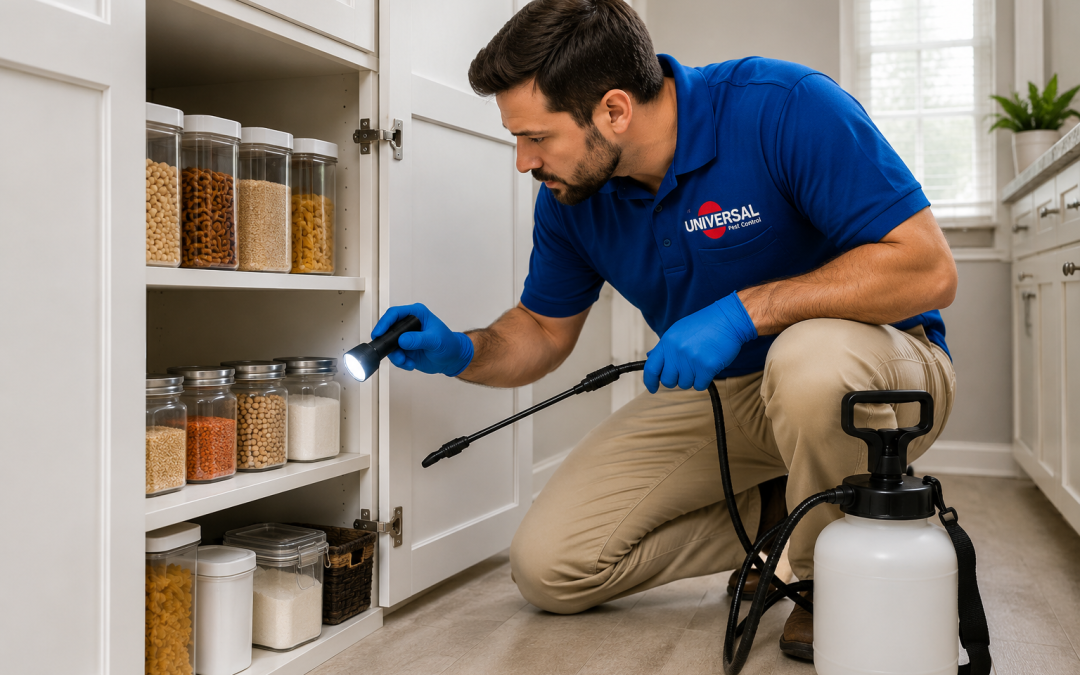
One of the easiest ways to prevent pantry pest is storing dry goods in airtight containers.
Good storage options include:
- Glass jars
- Heavy plastic containers
- Metal food storage containers
Avoid leaving food in paper or cardboard packaging.
5. Freeze Newly Purchased Dry Goods
Many pest professionals recommend freezing flour, grains, and similar products for several days after purchase.
This helps destroy any insect eggs before they’re able to hatch.
6. Rotate Food Frequently
Practice “first in, first out.”
Older food should always be used before newly purchased items.
Regular pantry inspections help detect infestations early.
How to Prevent Pantry Pests
Prevention is much easier than eliminating an established infestation.
Follow these best practices:
- Store food in sealed containers
- Clean pantry shelves regularly
- Vacuum crumbs immediately
- Don’t keep expired food
- Inspect groceries before storing
- Keep pet food sealed
- Buy smaller quantities of grains when possible
Routine cleaning significantly reduces the chances of pantry pest returning.
When Should You Call Professional Pest Control?
Small pantry infestations can often be handled with proper cleaning and food storage.
However, professional pantry pest control may be necessary if:
- Insects continue appearing after cleaning
- Moths spread throughout the house
- Multiple food products become infested
- You cannot locate the infestation source
- Pantry pest repeatedly return
Professional inspections help identify hidden breeding areas and recommend long-term prevention strategies.
If you’re experiencing recurring pantry pest problems, our residential pest control services can help eliminate infestations and protect your home from future pest activity.
Final Thoughts
Pantry pest may not pose the same structural risks as termites or the health concerns associated with cockroaches, but they can quickly contaminate stored food and become a recurring nuisance.
By inspecting groceries, storing food properly, maintaining a clean pantry, and acting quickly when insects are found, you can keep your kitchen free from pantry pests.
If the infestation continues despite your efforts, professional pest control is the safest and most effective solution.
Frequently Asked Questions
What are pantry pests?
Pantry pests are insects that infest stored food products such as flour, rice, cereal, pasta, nuts, spices, pet food, and dried fruits. Common species include Indian meal moths, weevils, and flour beetles.
Are pantry pests harmful?
Pantry pests generally do not bite or spread diseases. However, they contaminate food with eggs, larvae, webbing, and waste, making affected products unsuitable for consumption.
How do pantry pests get into my home?
Most pantry pests arrive inside packaged food products purchased from grocery stores. Eggs or larvae may already be present before the products are opened.
Should I throw away food with pantry pests?
Yes. Any food containing insects, larvae, webbing, or eggs should be discarded in a sealed bag to prevent the infestation from spreading.
Can pantry pests spread throughout my house?
Yes. Adult moths and beetles can move from one food source to another, allowing infestations to spread throughout your pantry and kitchen if not addressed promptly.
How can I prevent pantry pests?
Store dry goods in airtight containers, inspect groceries before putting them away, clean pantry shelves regularly, rotate food stock, and discard expired products.
Do I need professional pest control for pantry pests?
If pantry pests keep returning after cleaning and removing infested fd, professional pest control can identify hidden sources of the infestation and provide effective long-term solutions.

Todd Stebleton is the owner and operator of Universal Pest Control, a family-owned business for over 25 years in Ormond Beach, Florida. He and his wife Natalie are proud to have built a company focused on conducting business with honesty and integrity: keeping customers first, protecting the environment, and providing trustworthy, personal service.
Universal: Honest, Environmentally Friendly Pest Control