
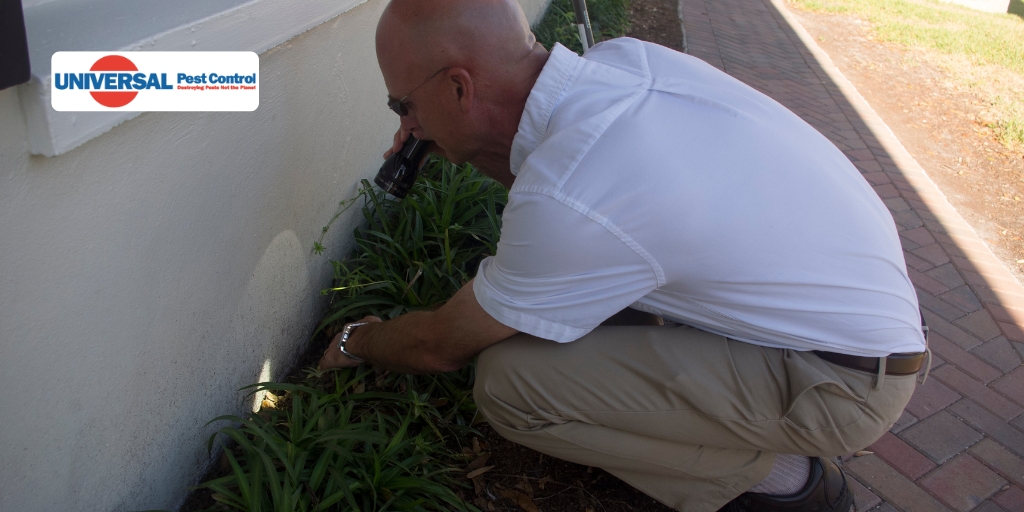
Termites are known as the silent destroyers because they quietly damage your property without you knowing about it. Without adequate termite treatment, they can cost thousands of dollars in damage to the home. If you find any sign of termite activity on your property, contact Universal Pest Control right away. Our exterminators would recommend an appropriate treatment once they had identified the type of termite and the level of infestation on the property.
To preserve your property, you must grasp the various sorts of termite control procedures. In this blog, we will look at the four main types of termite treatments, as well as the benefits and drawbacks of each method.
What Are Some Common Types Of Termite Treatments?
Fumigation Termite Control
Fumigation is specified for properties with severe drywood termite infestations. Drywood termites, unlike subterranean termites, do not need moisture and will only survive in the wood they eat. Fumigation entails creating a tent-like airtight construction around the property to be treated. Then, a deadly gas for termites is introduced into the tent, reaching even the most remote areas of the structure. The gas causes the termites to die, removing the drywood termite infestation in the home.
Advantages
- For drywood termites, it is the most successful result-oriented termite management technique.
- Even a serious drywood termite infestation may be eradicated with its assistance.
Limitations
- The process can take 24 to 72 hours, depending on the size of the property and the severity of the infestation. This may also increase the termite tent fumigation cost.
- People, plants, and animals on the land should seek alternative accommodations until the treatment is complete.
- The property must be prepared before fumigation and cleaned after the treatment.
Liquid Termite Treatment
This is the most commonly used method of termite control. This approach is quite efficient against subterranean termites. They live underground and infiltrate homes through soil contact points. Again, they must return to their underground nests because they need regular moisture. Liquid treatment involves diluting specially designed termiticides in water and applying them to the soil directly under or around the foundation.
When termites attempt to tunnel into the property, they must travel through the treated soil. The termiticides in the soil will eliminate the termites. However, if the termite infestation has become extensive, then there can be multiple entry points. A trench is dug around the property, and liquid termiticide is applied to the soil before it is refilled. Thus, a secure perimeter is constructed around the property.
Advantages
- Long-term effects of this treatment may persist for five to ten years.
- The finest defense against underground termites.
- It doesn’t need ongoing care.
- It can be applied to termite control both before and after construction.
Limitations
- For larger properties, it can get costly.
- Termites will only be eradicated if they come into contact with the treated soil.
- To maintain the barrier’s effectiveness, the treated soil should be changed as needed.
Termite Baiting
This is another termite management strategy that works against subterranean termites. Instead of constructing a trench around the property, holes are bored in the ground, and bait is placed inside. The baits comprise cellulose combined with termiticides. Subterranean termites are drawn to the cellulose in the baits and consume them. The termiticides in the baits are slow-acting, so the termites do not die quickly. They return to their nests and share the termiticides with the other termites. Eventually, the entire termite colony is poisoned and exterminated.
Advantages
-
- It is possible to eliminate the entire termite colony.
Long-term preventative measures.
Limitations
-
- It takes longer to affect the termites.
Needs regular monitoring.
Baits should be replaced.
Frequently recommended for use with liquid termite treatments.
Microwave Termite Control
This approach eliminates termites using heat energy. The heat is directed toward the termites, causing them to lose moisture and eventually die. The microwave termite management method is most effective for drywood termite infestations that are limited to specific locations.
Advantages
- There is no use of harmful gases or chemicals.
- Effective for removing small and restricted infestations.
- Cheaper than fumigation.
Limitations
-
- Not effective for severe drywood and underground infestations.
When To Call A Professional Termite Control
-
-
- Large Scale Infestation: Professional action is necessary if the termite infestation is substantial or the colonies are dispersed.
- Structural Damage: If there is considerable damage to the building’s structure, professional assistance should be sought.
- Lack of Expertise: If you’re unsure how to recognize termites or the degree of the infestation, it’s best to consult a specialist.
- Recurring Infestations: If earlier treatments have failed and termites keep returning, expert assistance can provide a more effective solution.
-
How Long Do Termite Treatments Last?
Termiticides can degrade with time. Furthermore, digging or any other activity that disrupts the soil around a structure’s foundation might impair the effectiveness. The treatment may last for several years, but the typical guideline is to withdraw a property every five years, depending on the manner of eradication. Inquire with your local exterminator, like Universal Pest Control, about the termite treatment’s expected effectiveness.
Annual Inspections
Annual inspections ensure that a home is protected. Without regular checks, there is no way to know for certain whether there is another infestation. When you have a contract, we will address any suspicious areas that are infested with termites and provide proper treatment.
Preventive Measures
As with other home care problems, homeowners can take the following precautions to prevent termite infestations:
-
-
- Vapor barriers built in crawl areas help to decrease dampness.
- Avoid using wood mulch near structures or foundations. It may contain termites or provide a channel for termites to penetrate a structure.
- Avoid directing sprinklers or hoses at a home’s foundation to keep it generally dry.
- Trim bushes on a regular basis to keep them from becoming too thick around the foundation.
-
Wrapping Up
Termites can cause significant harm if not controlled. Knowing your treatment options allows you to prevent infestation. Whether it be fumigation, liquid barriers, baiting, or microwave control, prompt professional intervention is essential. Don’t wait for the damage to occur. Schedule an inspection with Universal Pest Control, a leading business for pest control in Ormond Beach.